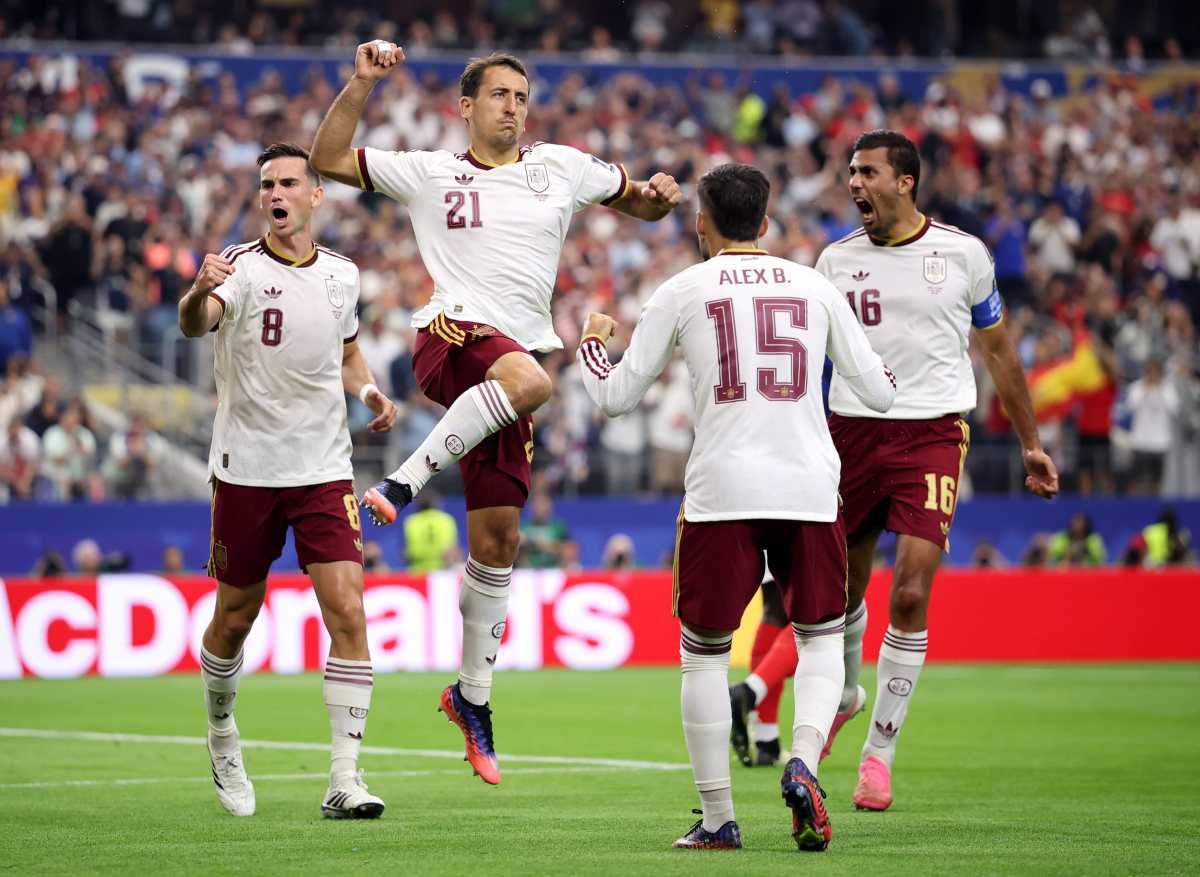
Cover photo taken from Getty Images.
It’s a fine thing to lose a match where you’re an underdog. The other team is better than you, plain and simple.
But there are such things as competitiveness and losing with grace, holding your head high as you go home knowing you gave it all you had. We’ve seen that time and time again at this World Cup, from Cape Verde and Egypt to Norway and Mexico.
After a lifeless showing in a 1-0 loss to Spain in the World Cup final where they showed more fight with their fists than their feet, Argentina can’t do any of that.
Most well-informed prognosticators would have told you that Spain were the clearly superior side heading into the final. It didn’t take very long to realize how truly substantial that gap in quality was.
From the opening whistle, Spain were in complete control of the match thanks to their patented possession domination and boa constrictor-like defending. Having 65% possession and completing 763 passes to Argentina’s 357 felt like numbers that we could have guessed on Sunday morning.
That in and of itself was not a surprise. The shock came in just how effectively they neutralized one of the best attacking teams at this tournament, spearheaded by the so-called GOAT, Lionel Messi.
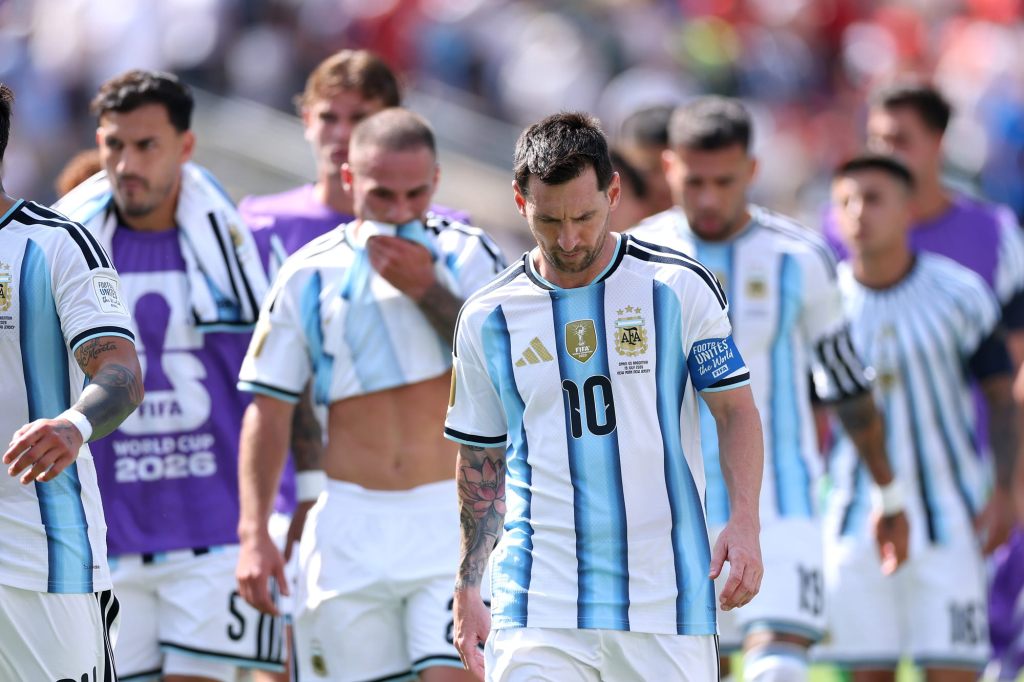
Argentina became the first team in World Cup history to not muster up a single shot in 90 minutes of play — an unfathomable stat by its lonesome. And even after the additional 30 minutes, that total sat at a measly two shots, none of which were on net. The defending champs finished without a single big chance, a drab 0.22 xG and just eight touches in the Spanish box.
It’s fair to say that Spain didn’t make the most of their attacking chances, putting many of their shots right down the middle for easy saves or failing to even convert a big chance into a shot. Still, they wound up with a whopping 20 shots, 12 shots on net and 2.29 xG with 32 touches in the opposing box.
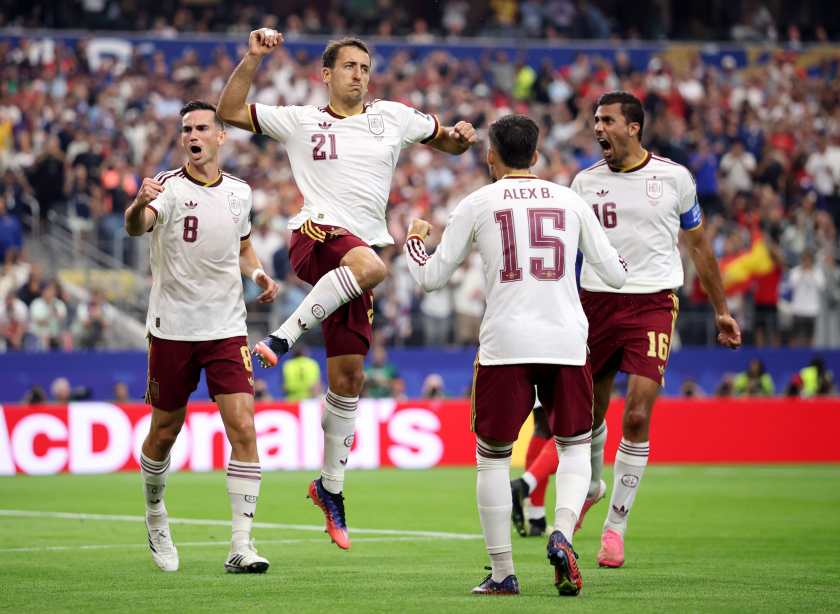
Forget a World Cup final — that would be a shocking discrepancy if this was Spain and Curaçao. If it wasn’t for another unbelievable Dibu Martinez effort in the Argentina net, this final would’ve been over before it even started. Thank goodness Ferran Torres found the back of the net in the 106th minute, because I think Messi and company would have actually won a penalty shootout with Dibu playing like he was.
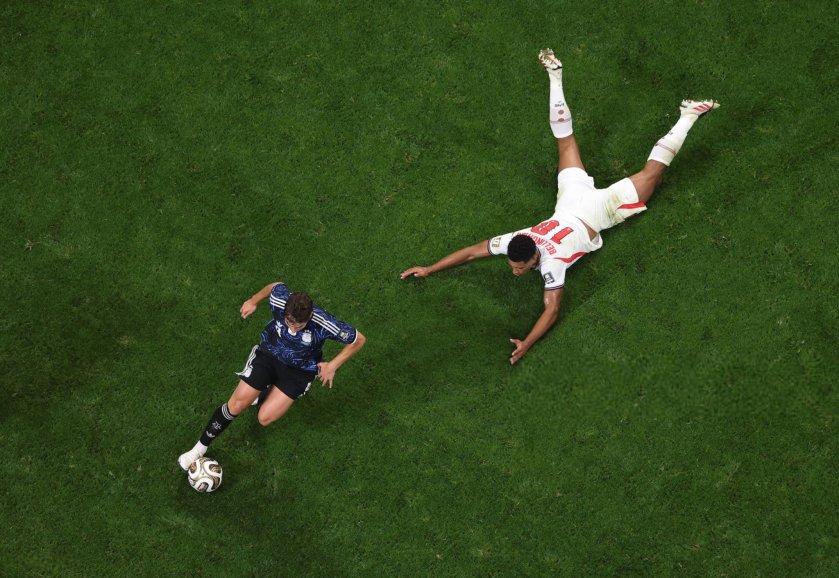
But the poor quality of play might not even be the biggest embarrassment that Argentina provided on Sunday afternoon in New Jersey. They diluted and spoiled the match with their trademark thuggery and baseless crybaby mentality, all while the referees let them get away with their usual shenanigans for quite some time.
It started early when Mac Allister leapt for an ill-advised slide tackle attempt on Dani Olmo and crunched him to the ground without making a shred of contact with the ball. A whistle blew for a foul, but no card was shown; if you’re going to use the excuse of it being “too early” in the match for a booking, then you’re beyond mistaken. A challenge like that deserves a yellow card, regardless of it being the first or 90th minute.
Fast forward a few minutes and Lamine Yamal was brought to the ground by Nicolas Tagliafico in a challenge that would get an NFL player fined for a hip-drop tackle. The 19-year old winger was grabbed by the shoulders before Tagliafico leapt into the air and got nearly parallel to the ground before dragging Yamal to the turf. Again, no yellow card despite the fact that a more “successful” challenge could’ve resulted in a game-changing injury.
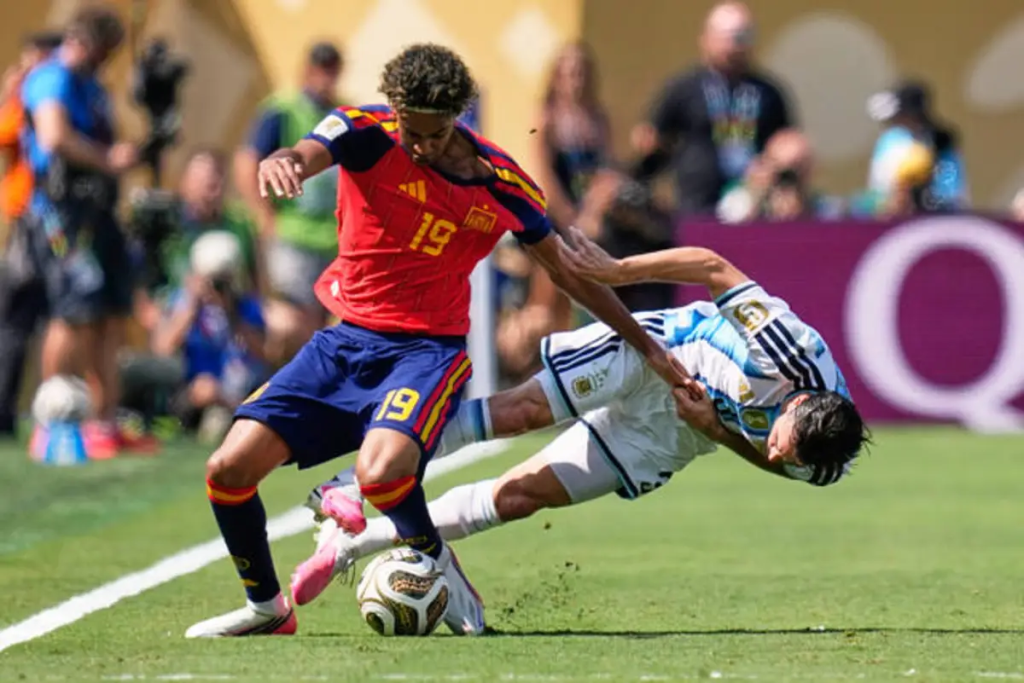
Color was finally shown after halftime when freshly-subbed-on Leandro Paredes pushed Rodri in the back, sending him to the ground with some admittedly unnecessary embellishment.
Enzo Fernandez was shown a yellow in the 82nd minute for simulation — a booking that he could only smile about — and it felt like he, as a key member of the Argentina attack, would conduct himself with a little more decorum, especially as extra time seemed like more and more of a certainty. But no, he leapt into Pau Cubarsi with one of the most puzzling challenges you’ll ever see in stoppage time, sending the eventual Best Young Player award winner flipping in the air. It was an easy decision for a second yellow, despite Enzo’s nonsensical petitions, wagging his finger in the air in protest.
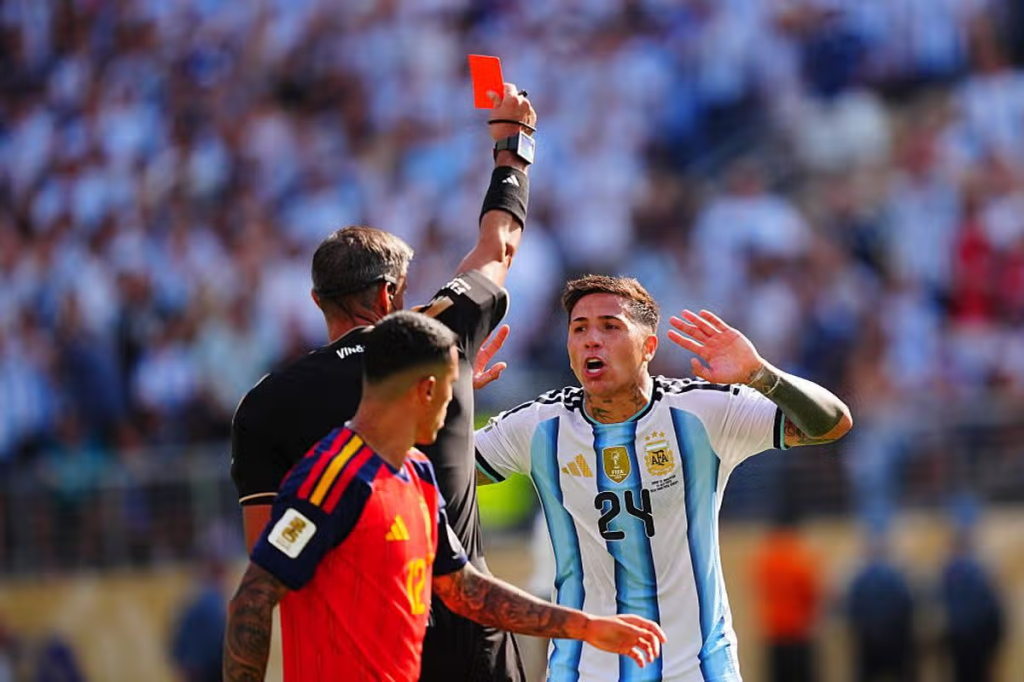
Playing extra time with 10 men, even Messi got in on the action to try to level the playing field by raising his hand and calling for the referee after Marc Cucurella briefly brought his hand to his mouth during a stoppage of play, appealing for a red card. It was embarrassing, akin to a school bully appealing to his teacher because the little guy finally fought back — completely beneath the station of the consensus best player ever.
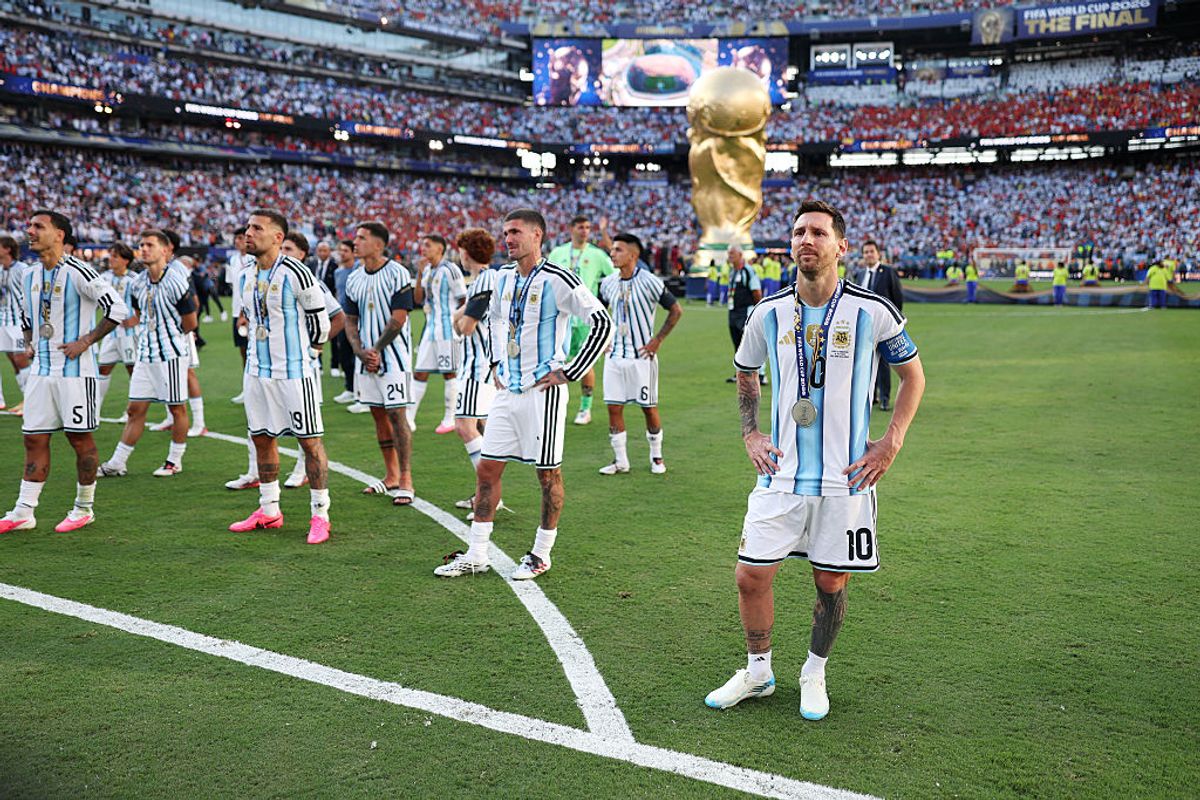
And to wrap it all up in a neat bow, Paredes incited a post-game scuffle right after the final whistle, getting in the chest of Eric Garcia and eventually grabbing him by the throat leading to a mild brawl between six or seven Spaniards and Argentines. And though they stayed on the pitch for Spain’s celebrations, Argentina turned their backs to the stage while their necks were weighed down with silver medals that they neither wanted nor deserved.
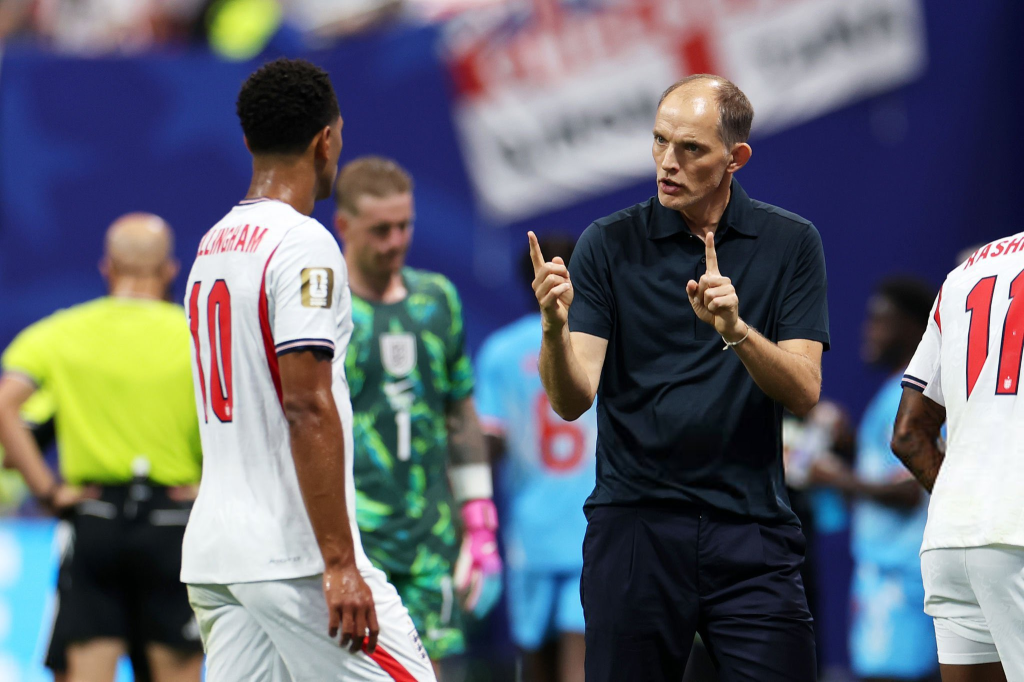
It’s sad that this is what the defending champions have been reduced to. From Messi’s studs-on-calf challenge against Algeria not resulting in a foul, to the disallowed Egypt goal and subsequent claims of racism by Hossam Hassan, to the wild red card that sent off Breel Embolo of Switzerland and finally provoking Jude Bellingham of England and all the ballyhoo of the final. Argentina provided so much excitement to this tournament with their late-game heroics, but we will only remember them for their non-football antics that sullied an otherwise memorable run in Messi’s last hurrah.
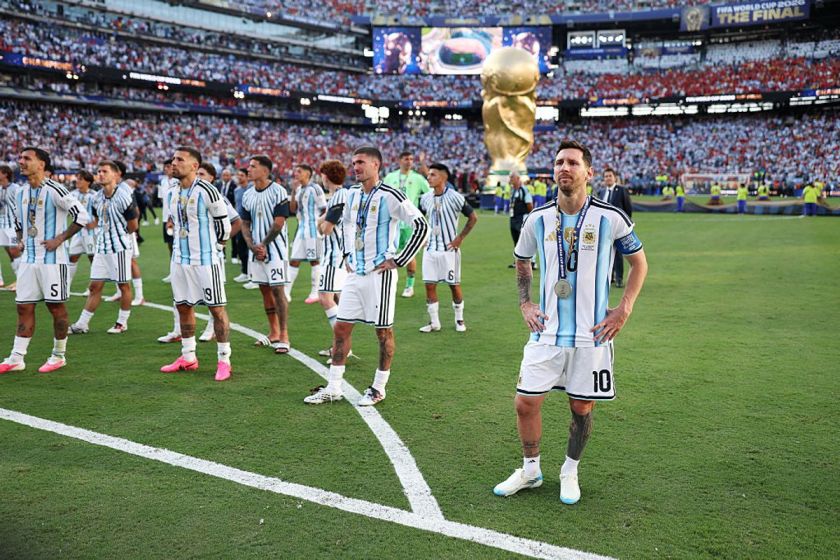
The 2026 FIFA World Cup was the biggest, most grandiose edition of the globe’s greatest competition to date. It was filled with heartwarming stories, unlikely heroes and incredible theater with some of the best games we’ve ever seen. The past six weeks in North America provided some of the most indelible sights and sounds in history, and we will never forget this incredible tournament on home turf.
For Argentina — the defending champions who are led by perhaps the greatest player to ever touch a football — to have gone out so sad and disgraced is equal parts unsurprising and disappointing.
German football legend Toni Kroos said it best on Twitter yesterday after the Spanish victory: football won.